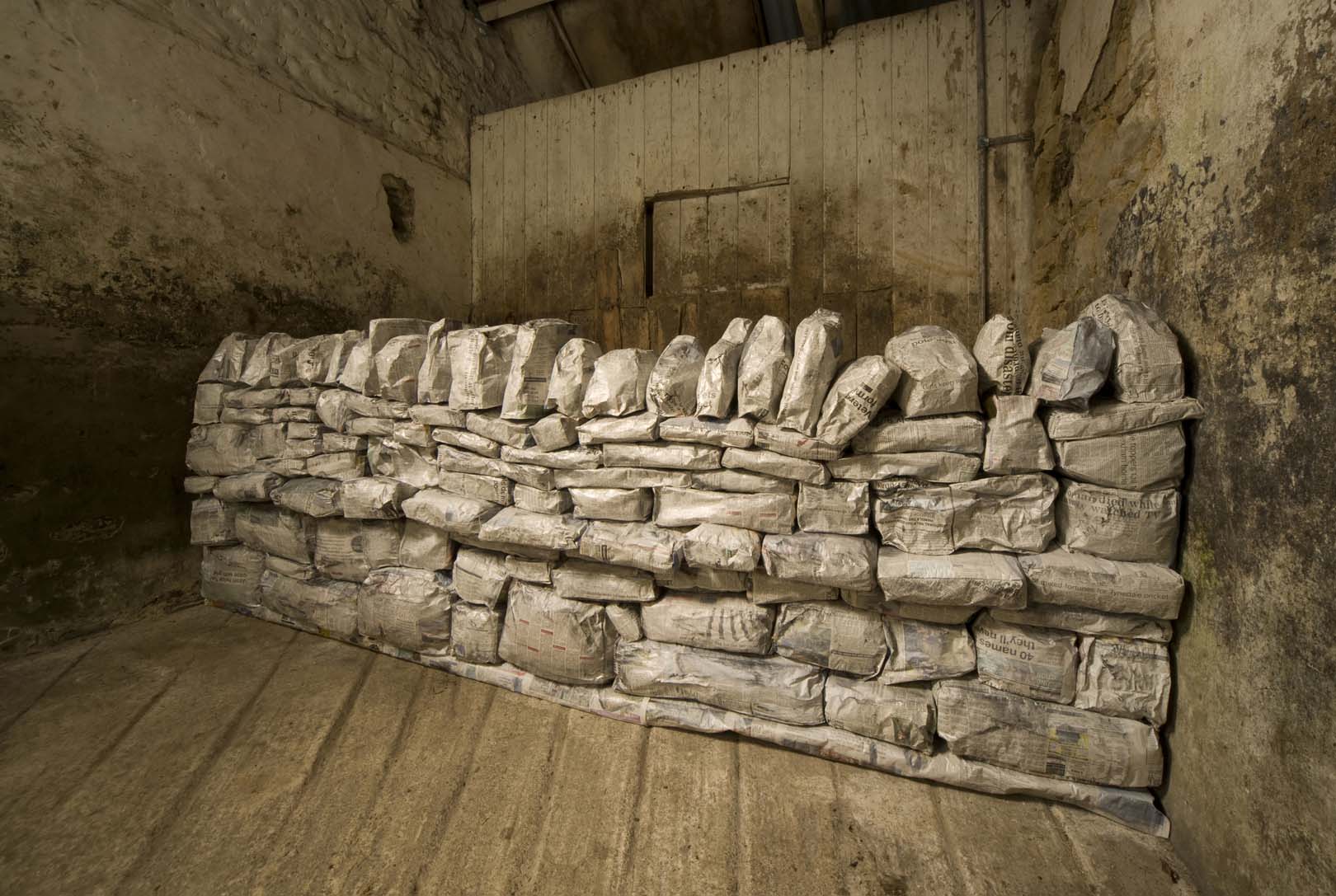
Newspaper (Hexham Courant), cotton thread, staples, graphite, ink and PVA. Installation 9 x 3.5 x 1 ft (approximately) – 2010
Dry stone walls are not merely features of agricultural interest; they are, in a sense, living history; a legacy of the movement towards enclosure of common farming and grazing land. The Enclosure Acts of the 18th and 19th century gave rise to an explosion of wall building that we still see evidence of today. The parcelling of land into private ownership provided a strong impetus to permanently delineate such territory, and stone and labour were in plentiful supply at that time. With sheep and cattle, the dry-stone wall provided a means of protecting such a valuable investment. Dry-stone walls became a permanent feature of the landscape, and are now part of our heritage. The age of most dry-stone walls is around 200 years; a testament to their durability and the skill of the men who built them. Most walls we see today would have been rebuilt and repaired several times over the years. Nevertheless, with the development of modern agriculture, dry-stone walls are in decline.
The phrase, “The writing on the wall,” originates in the biblical book of Daniel, where supernatural writing foretells the demise of the Babylonian Empire. The idiom has come to signify a portent of doom, or the end of an organization or activity.